As the years pile on, so do memories of things one USED to own. Old things, once irreplaceable accouterments of the daily minutia, now lost to the blurry gloom of time. An old pair of shoes that took us miles, an old video cassette (remember them; the thick, heavy black things that nobody EVER rewound) that entertained us, an old videogame that occupied so many hours. So many things bought and used. So many dollars spent on things we can barely remember having.
The boxes those things could fill. Long hours spent looking for them. Rummaging through old closets and niches, exploring darkened corners and remembering moments in time that you thought you would forget. But you never do. You know the one's, those scenes of the past that replay. You can feel the emotion, picture all the little details, and hear all the voices as though it happened only yesterday... even after twelve or fifteen years. Some things you would like to forget, but never will. Some moments that you wish you could reach-back to change. But you can't.
An odd thing, that. The abstraction of time, so loose and so unreal, becomes something like stone once the moment drifts by. There! See it. Now that moment is gone, and you cannot unread what you have just read, nor retract that mumbled "what-the-fuck?" you just uttered in response to this rambling, rolling diatribe.
Screw the memories, WHAT ABOUT THE STUFF!! All that stuff. All the shit that was bought. All those chochkies that they no longer make. Some of it has to have at least SOME collector value. As time rolls-on there's less and less of it still around, what's left out there must get more valuable. What's an old videotape worth? Nobody uses them, but surely someone must want them.
Christ, if only you had saved half-of-it... if only.
Wednesday, July 9, 2014

Sunday, June 29, 2014
Tom G Reviews: American Hustle
"American Hustle"... what can I say about "American Hustle". Everybody just loves it. Rave reviews, a smash at the box office, praise and honors from all over. Director David O. Russell's love letter to the 1970's has certainly made a lot of people very happy and lot of hipsters very horny. Well, let's cut the bullshit and get to it, yes.
"American Hustle" weaves a tale of Long Island dry cleaner and con artist, Irving Rosenfeld (played by Christian Bale) and his mistress Sydney Prosser (played by Amy Adams) who, with little choice, become instrumental in an FBI investigation headed by nefarious agent, Richie DiMaso (Bradley Cooper). All the while they must cope with conflicted emotions for those they are helping to arrest, Rosenfeld's passive aggressive wife (played without breaks by Jennifer Lawrence), and DiMaso's increasing obsessiveness as he leads them down a rabbit hole of cons and entrapment in which they must hustle for their very survival.
 "American Hustle" is an exaggerated telling of the "ABSCAM" investigation of 1978 to 1981-or-so in which the FBI used a con artist to bribe and in many cases entrap various congressmen, mayors, and senators - mostly infamously the mayor of Camden, New Jersey played in the film by a pompadour wearing Jeremy Renner. One thing the film does very well in this sense is to capture the malevolent nature of the case in which the FBI used any method to tempt those in its cross-sight. DiMaso is in charge of the case, it's his. He wants to make BIG cases against BIG figures which will attract BIG headlines. He wants to be Elliot Ness in bell bottoms. And much to Rosenfeld's dismay, it brings them dangerously close to some very sinister people. Agent DiMaso, like Captain Ahab, turns-out to be a user of those who need him and an abuser of those who disagree with him.
There are moments in this film that I love. There are moments of humorous arguments and lines that left me reeling and choking on my smoker's cough. There are moments of characterization... streams of consciousness - mainly by Rosenfeld - in which this cast of polyester-clad miscreants are given depth and dimension and we are allowed the illusion of reality. There moments between characters that disgust, warm, amuse, and break your heart. And then there are moments that you regret seeing so much that you could just punch the director, the editor, and the cinematographer for showing you. "American Hustle" has many moments.
 Well shot and well designed, the mise-en-scene of American Hustle is an impressive and tasteless mix of 1970's nostalgia kitsch and an impressive visual realization. "American Hustle" has a schizophrenia about it. On one hand, the cheap grotesqueness of the characters both in dress and behavior lend credibility to the film. It's a verisimilitude that can be scene in similar costume pieces like "Boogie Nights" (1997) or "Lymelife" (2008). But where there is one hand, there is always another.
"American Hustle" brutally kills its initial verisimilitude by doing something that is far too common in films today. It becomes too self aware. There are many, many slow motion shots set to your typical 1970's soundtrack. Many instances of actors doing 1970's stuff but in a very aware way as one might find at a 70's themed party. And yes, the film is supposed to be funny. But it also needs to be taken seriously enough to make us care. All of that dimension I talked about before ends-up getting lost when Jennifer Lawrence is jamming-out like a college girl wearing a wig or when we are subjected to a disco scene that feels like a commercial for the Palms in Las Vegas. Like any art or craft, storytelling is made in its subtlety. Too little, you fail to impact. Too much, you overwhelm.
 The characters in this film are generally unlikable. Which I can get on board with. The only character that I imagine anybody sympathizing with is Irving, and not just because I do. Christian Bale really went all-out for this role, including disfiguring his own hair and gaining weight. Almost like a living homage to Robert DeNiro's method acting (look-out for DeNiro in a cameo), Bale transforms himself into a balding, insecure, rotund New York Jew caught between a disingenuous mistress, a bad marriage to a complete bitch, and an FBI Agent's machinations that will force him to betray a new found friend. Of all the character's who inhabit with film, Irving has the most dimension, the most complexity, the most understandable motivations, the greatest conflict... and yet not nearly enough story line.
Instead of focusing on its strongest point, Irving and his conflict, American Hustle is steered into a Bermuda Triangle of plot and trying to be 70's. It becomes bogged-down in jumping from one plot point to another, one case to another, one moment of Amy Adam's cleavage to another. Much like this blog. It really is unfortunate because there are few things in film sadder than when a filmmaker squanders his most valuable asset. More focus on Irving really could have given this film more substance.
 "American Hustle" is about becoming something. Irving with his Coup DeVille and his comb over is trying to become something. Sydney with her sensuality and her faux British accent is trying to become something. DiMaso with his Caligula perm and his Lucchesi boots is trying to become something. While they play their chosen roles and make-up lines as they go along, it become obvious to we the audience as well as themselves that it is all a game of pretend.
In so many ways, that is "American Hustle". It is a film that leads us to believe it to be something that we expect it to be. Then it violates those expectations by revealing itself to be something else. Ultimately, though, it turns-out to be something confusing that complicates our feelings about it. Like a lover who steals your money and runs-off with your best friend, I entered warily into "American Hustle". Ultimately there are things about the film that I love, and yet the film sabotages itself by neglecting those things, and often even working against them. I want so much to love this film and yet I cannot. "American Hustle" broke my heart and cleaned-out my savings after a short and stormy romance.

"American Hustle" weaves a tale of Long Island dry cleaner and con artist, Irving Rosenfeld (played by Christian Bale) and his mistress Sydney Prosser (played by Amy Adams) who, with little choice, become instrumental in an FBI investigation headed by nefarious agent, Richie DiMaso (Bradley Cooper). All the while they must cope with conflicted emotions for those they are helping to arrest, Rosenfeld's passive aggressive wife (played without breaks by Jennifer Lawrence), and DiMaso's increasing obsessiveness as he leads them down a rabbit hole of cons and entrapment in which they must hustle for their very survival.
"American Hustle" is an exaggerated telling of the "ABSCAM" investigation of 1978 to 1981-or-so in which the FBI used a con artist to bribe and in many cases entrap various congressmen, mayors, and senators - mostly infamously the mayor of Camden, New Jersey played in the film by a pompadour wearing Jeremy Renner. One thing the film does very well in this sense is to capture the malevolent nature of the case in which the FBI used any method to tempt those in its cross-sight. DiMaso is in charge of the case, it's his. He wants to make BIG cases against BIG figures which will attract BIG headlines. He wants to be Elliot Ness in bell bottoms. And much to Rosenfeld's dismay, it brings them dangerously close to some very sinister people. Agent DiMaso, like Captain Ahab, turns-out to be a user of those who need him and an abuser of those who disagree with him.There are moments in this film that I love. There are moments of humorous arguments and lines that left me reeling and choking on my smoker's cough. There are moments of characterization... streams of consciousness - mainly by Rosenfeld - in which this cast of polyester-clad miscreants are given depth and dimension and we are allowed the illusion of reality. There moments between characters that disgust, warm, amuse, and break your heart. And then there are moments that you regret seeing so much that you could just punch the director, the editor, and the cinematographer for showing you. "American Hustle" has many moments.
"American Hustle" brutally kills its initial verisimilitude by doing something that is far too common in films today. It becomes too self aware. There are many, many slow motion shots set to your typical 1970's soundtrack. Many instances of actors doing 1970's stuff but in a very aware way as one might find at a 70's themed party. And yes, the film is supposed to be funny. But it also needs to be taken seriously enough to make us care. All of that dimension I talked about before ends-up getting lost when Jennifer Lawrence is jamming-out like a college girl wearing a wig or when we are subjected to a disco scene that feels like a commercial for the Palms in Las Vegas. Like any art or craft, storytelling is made in its subtlety. Too little, you fail to impact. Too much, you overwhelm.
The characters in this film are generally unlikable. Which I can get on board with. The only character that I imagine anybody sympathizing with is Irving, and not just because I do. Christian Bale really went all-out for this role, including disfiguring his own hair and gaining weight. Almost like a living homage to Robert DeNiro's method acting (look-out for DeNiro in a cameo), Bale transforms himself into a balding, insecure, rotund New York Jew caught between a disingenuous mistress, a bad marriage to a complete bitch, and an FBI Agent's machinations that will force him to betray a new found friend. Of all the character's who inhabit with film, Irving has the most dimension, the most complexity, the most understandable motivations, the greatest conflict... and yet not nearly enough story line.Instead of focusing on its strongest point, Irving and his conflict, American Hustle is steered into a Bermuda Triangle of plot and trying to be 70's. It becomes bogged-down in jumping from one plot point to another, one case to another, one moment of Amy Adam's cleavage to another. Much like this blog. It really is unfortunate because there are few things in film sadder than when a filmmaker squanders his most valuable asset. More focus on Irving really could have given this film more substance.
In so many ways, that is "American Hustle". It is a film that leads us to believe it to be something that we expect it to be. Then it violates those expectations by revealing itself to be something else. Ultimately, though, it turns-out to be something confusing that complicates our feelings about it. Like a lover who steals your money and runs-off with your best friend, I entered warily into "American Hustle". Ultimately there are things about the film that I love, and yet the film sabotages itself by neglecting those things, and often even working against them. I want so much to love this film and yet I cannot. "American Hustle" broke my heart and cleaned-out my savings after a short and stormy romance.
Sunday, May 18, 2014
Tom G Reads: American Pastoral
All right, here we go...
Philip Roth's 1997 tome, "American Pastoral", was an interesting trip for sure. Leading into the dark under croft of the American soul, Roth weaves a tale of humanity in all its beauty and horror as his protagonist must explore the heart wrenching depths of fatherhood, tragedy, and reflection.
A little background. I first became acquainted with this novel while delving perversely into the urban decay of Newark, New Jersey. I ran across mention of American Pastoral as it references Newark not only as a setting but as well a backdrop and embodiment of its themes of American optimism, pride, sin, self-destruction and eternal purgatory. A paradise lost. I was intrigued, to say the least, I knew I had to get hold of this book, but was simply too cheap to buy it. Enter the college library, and the opportunity to read it for free. An opportunity I did not hesitate to embrace. I found the book sitting alone of a shelf, sadly waiting to be rediscovered after a long neglect.
The story is told by "Nathan Zuckerman" a regular narrator in many of Philip Roth's works, and probably a literary persona for the writer himself. Zuckerman tells the story of Seymour "Swede" Levov, that rarity of blond, Jewish athlete whose story haunts Zuckerman after a high school reunion in his Newark neighborhood. In a series of long, often disorienting flashbacks, the narrator (Zuckerman) describes Swede Levov's arc in three parts. Part One, Swede's charmed life as a high school star athlete, war hero, inheritor of his family's successful glove factory, husband of a New Jersey beauty queen, and father of his daughter, Merry. In Part Two we learn of Merry's deep-seeded troubles, her turn to the radicalism of the late 1960's and the the tragic results. Swede, heartbroken and desperate to find his murderous daughter delves into a dark and hellish world of secret meeting, sexual temptation and the morose abyss of accepting what his daughter has done. In Part Three, Swede finally finds his terrifyingly disturbed daughter, alone in the dark, Dante-esque landscape of post-industrial Newark. His marriage crumbled, and unable to save his daughter, Swede is left to accept the loss of the past and to face the uncertain future.
 American Pastoral is told in an interesting way. It is told through the narration of a character who was not there. Who barely knows Swede. It is almost pieced together from the knowledge and imagination of a less-than-reliable source. At one point it transitions to Swede's point-of-view, but even here I felt as if I was still listening to Zuckerman attempt to reconstruct the events and thoughts that surround Swede. Why is Zuckerman so fascinated by this? What does Swede Levov and his story, if it's even true, represent to Zuckerman. Is it an allegory for Newark's fall-from-grace? Is it an allegory for America's fall-from-grace. Could this life of achievement and hope, brought-down by desperation and self-destruction be the story of America in the 20th century? Or does that all even matter to Zuckerman? Perhaps Zuckerman is Virgil, showing us the netherworld. A guide and voice to help us find meaning in all of it.
Philip Roth's writing was that of an old pro. He knows how to tell a story. The language of American Pastoral paints a vivid and even surreal set of pictures in our mind. Reading this, I could see the people, the place, the time. I could feel the story's emotion, I could feel the heart of its characters. Its pathos, palpable and real.
There was one glaring problem I found with the novel. There was a lot of unnecessary writing here. A lot of what seems like padding and over-extensions just to reach eighty-thousand words. For instance, paragraph-after-paragraph, and sometimes across multiple pages describing the manufacturing of ladies gloves. At times is was so tedious that I had not choice but to sacrifice my weak and wounded and march-on. It's not a good thing when the read has to skim and skip just to stay on board.
Overall, American Pastoral was rewarding read, even if padded. At its core is a story that one can grasp and feel. It is a meal with many parts and many flavors. There is a lot here. The rise and decline of a family mirrors that of its home city and of the United States as a whole. The parable of a hero, loved and admired, who is brought to his knees and broken by what he has made and yet unable to understand. A force of destruction greater than any: his own child. Swede Levov, like Newark and America, is torn-apart by his own offspring.
Philip Roth's 1997 tome, "American Pastoral", was an interesting trip for sure. Leading into the dark under croft of the American soul, Roth weaves a tale of humanity in all its beauty and horror as his protagonist must explore the heart wrenching depths of fatherhood, tragedy, and reflection.
A little background. I first became acquainted with this novel while delving perversely into the urban decay of Newark, New Jersey. I ran across mention of American Pastoral as it references Newark not only as a setting but as well a backdrop and embodiment of its themes of American optimism, pride, sin, self-destruction and eternal purgatory. A paradise lost. I was intrigued, to say the least, I knew I had to get hold of this book, but was simply too cheap to buy it. Enter the college library, and the opportunity to read it for free. An opportunity I did not hesitate to embrace. I found the book sitting alone of a shelf, sadly waiting to be rediscovered after a long neglect.
The story is told by "Nathan Zuckerman" a regular narrator in many of Philip Roth's works, and probably a literary persona for the writer himself. Zuckerman tells the story of Seymour "Swede" Levov, that rarity of blond, Jewish athlete whose story haunts Zuckerman after a high school reunion in his Newark neighborhood. In a series of long, often disorienting flashbacks, the narrator (Zuckerman) describes Swede Levov's arc in three parts. Part One, Swede's charmed life as a high school star athlete, war hero, inheritor of his family's successful glove factory, husband of a New Jersey beauty queen, and father of his daughter, Merry. In Part Two we learn of Merry's deep-seeded troubles, her turn to the radicalism of the late 1960's and the the tragic results. Swede, heartbroken and desperate to find his murderous daughter delves into a dark and hellish world of secret meeting, sexual temptation and the morose abyss of accepting what his daughter has done. In Part Three, Swede finally finds his terrifyingly disturbed daughter, alone in the dark, Dante-esque landscape of post-industrial Newark. His marriage crumbled, and unable to save his daughter, Swede is left to accept the loss of the past and to face the uncertain future.
American Pastoral is told in an interesting way. It is told through the narration of a character who was not there. Who barely knows Swede. It is almost pieced together from the knowledge and imagination of a less-than-reliable source. At one point it transitions to Swede's point-of-view, but even here I felt as if I was still listening to Zuckerman attempt to reconstruct the events and thoughts that surround Swede. Why is Zuckerman so fascinated by this? What does Swede Levov and his story, if it's even true, represent to Zuckerman. Is it an allegory for Newark's fall-from-grace? Is it an allegory for America's fall-from-grace. Could this life of achievement and hope, brought-down by desperation and self-destruction be the story of America in the 20th century? Or does that all even matter to Zuckerman? Perhaps Zuckerman is Virgil, showing us the netherworld. A guide and voice to help us find meaning in all of it.Philip Roth's writing was that of an old pro. He knows how to tell a story. The language of American Pastoral paints a vivid and even surreal set of pictures in our mind. Reading this, I could see the people, the place, the time. I could feel the story's emotion, I could feel the heart of its characters. Its pathos, palpable and real.
There was one glaring problem I found with the novel. There was a lot of unnecessary writing here. A lot of what seems like padding and over-extensions just to reach eighty-thousand words. For instance, paragraph-after-paragraph, and sometimes across multiple pages describing the manufacturing of ladies gloves. At times is was so tedious that I had not choice but to sacrifice my weak and wounded and march-on. It's not a good thing when the read has to skim and skip just to stay on board.
Overall, American Pastoral was rewarding read, even if padded. At its core is a story that one can grasp and feel. It is a meal with many parts and many flavors. There is a lot here. The rise and decline of a family mirrors that of its home city and of the United States as a whole. The parable of a hero, loved and admired, who is brought to his knees and broken by what he has made and yet unable to understand. A force of destruction greater than any: his own child. Swede Levov, like Newark and America, is torn-apart by his own offspring.
Monday, April 28, 2014
Tom G Reads: The Road
Oh, the road. Some are made of yellow bricks and some are highways to hell. And some wind through the hellishness of a post-apocalyptic world. This is Cormac McCarthy's 2006 novel, "The Road".
The worst has happened. What is was, we'll never know. McCarthy never says what has happened. All we know is that it was BAD. Bad enough, in fact, to bring civilization as we know it to an end. Ruinous cities and ramshackle ghost towns are inhabited by the last shambles of the America that once was. Appropriately enough, they are predatory cannibals who stalk the roads for prey to rape and kill. Hell, they even devour their own dead. Waste not, want not... yes?
 From the rubble of some northern city emerges a man and his son whose names we do not know. Whose names we do not really need to know. The man, broken in health and spirit is the last veteran of the old world. He was there for the transition, he saw day become eternal night. His wife, the mother of his only son, is dead. Now he alone cares for the boy. The sun becomes dimmer, and the skies darken, he and the boy must venture south in search of something... anything more hospitable than this. They do not know what they'll find, if anything, or what they'll face along the way. But they must go. To go means possible death. To stay means certain death. If worse comes to worse, they have two bullets in the chamber.
"The Road" strikes me as a book about more than the end of the world. It is more than its post apocalyptic nightmare. The man, ragged and forlorn, must protect his son and instill in him what little of the old ways as he can conjure. With what little they have and with what little they can find, they manage to survive and carry-on. When there is absence, Man makes. In the absence of light, Man makes light. In the absence of warmth, Man kindles fire. In the absence of faith, Man makes it. It is man against a world of absence.
In a world of darkness, man must carry the light. The boy is the light. He is the only hope. His father, like almost any father since the beginning of time, will do anything to protect him and to save him and to teach him. "The Road" in its simple style, gritty as the highway it wanders, is an ode to mankind's ability. The same ability that has driven it since the dawn, now drives it on the edge of night.
The worst has happened. What is was, we'll never know. McCarthy never says what has happened. All we know is that it was BAD. Bad enough, in fact, to bring civilization as we know it to an end. Ruinous cities and ramshackle ghost towns are inhabited by the last shambles of the America that once was. Appropriately enough, they are predatory cannibals who stalk the roads for prey to rape and kill. Hell, they even devour their own dead. Waste not, want not... yes?
From the rubble of some northern city emerges a man and his son whose names we do not know. Whose names we do not really need to know. The man, broken in health and spirit is the last veteran of the old world. He was there for the transition, he saw day become eternal night. His wife, the mother of his only son, is dead. Now he alone cares for the boy. The sun becomes dimmer, and the skies darken, he and the boy must venture south in search of something... anything more hospitable than this. They do not know what they'll find, if anything, or what they'll face along the way. But they must go. To go means possible death. To stay means certain death. If worse comes to worse, they have two bullets in the chamber. "The Road" strikes me as a book about more than the end of the world. It is more than its post apocalyptic nightmare. The man, ragged and forlorn, must protect his son and instill in him what little of the old ways as he can conjure. With what little they have and with what little they can find, they manage to survive and carry-on. When there is absence, Man makes. In the absence of light, Man makes light. In the absence of warmth, Man kindles fire. In the absence of faith, Man makes it. It is man against a world of absence.
In a world of darkness, man must carry the light. The boy is the light. He is the only hope. His father, like almost any father since the beginning of time, will do anything to protect him and to save him and to teach him. "The Road" in its simple style, gritty as the highway it wanders, is an ode to mankind's ability. The same ability that has driven it since the dawn, now drives it on the edge of night.
Sunday, March 16, 2014
The Fallen Knight
In a dry patch of earth... the only dry earth in this field of rain, blood and urine soaked mud and misery, lies a gentleman. As the sky breaks into the fading light of dusk, the softly dying light shines against his plate. What plate that hasn't been soiled in the sopping foulness of battle. He is still, as they all are at that stage. His hammered metal shell does not move, neither does the the dark, bloody cloth of his padded garments beneath. He is still, so completely still that he is most certainly dead. His cratered helm and the cracked skull beneath are most certainly what fell him.
Death, or at least life in its very final stages, is a strange thing. He lays there, as they all lay there, on that fouled ground totally still. Still as stones in night's blackness. He makes no sound. His chest does not expand with breath. His mouth, choked with the blood that leaks from the orifices of his inner head does not tremble or close. It just hangs open in a sad, soundless cry. And yet, as you pass him slowly and even admire his armor, you notice that his eyes - shrouded in the shadow of his visor and the blackish brown of dried blood - watch you. They lock with yours as you move slowly above him.
You cannot see the color of those eyes, nor make their shape. But you can see the fading light in them... the fading flame of his life in them. He was young, and strong, and intense. His now still legs were strong and quick, and his shoulders hardy enough to control his war horse. He was not a wealthy man, nor a poor one. He is the son of a landed family. His fate, and his fortunes, and his understanding of himself was tied to the land. The rolling piedmont and forests of the pastoral north country. He was probably married, to a right fair lady of a quiet temper and a Christian heart. He loved, as even a pauper or prince would. You can see it in his face. His heart was not an evil one, and for as much blood as he could shed, he would not have otherwise. If he could have had if any other way, his life would have carried on. The quite life of a shire Knight; tending the estate, hunting boar and buck, siring as many children as his goodly wife could bare, filling his belly with wine, receiving communion, growing old with the seasons.
But here is where his song will end. He lies broken beneath his plate, unable to speak, or to pray. His hand is locked around his sword, though the stench of excrement is sure sign that he has no feeling his body. A grim and saddened priest performs one final blessing on him. He is sure to die, if not now then later, probably at the hands of a merciful archer who will put him out... and then take what he carry. He may last the night in his silence. Waiting to finally fade away. To be taken by the divinity and finality of God's plan.
 As you move away, you wonder who he was, and what his life had truly been. To whom his heart had truly belonged. You wonder when he will finally pass into death. You swallow the bitter tragedy of knowing that his time had not ended by God's plan... it had ended by misfortune. The misfortune of his time, of his birth and of his station.
...You feel his eyes turn from you to gaze into heaven and ponder the same things.
Death, or at least life in its very final stages, is a strange thing. He lays there, as they all lay there, on that fouled ground totally still. Still as stones in night's blackness. He makes no sound. His chest does not expand with breath. His mouth, choked with the blood that leaks from the orifices of his inner head does not tremble or close. It just hangs open in a sad, soundless cry. And yet, as you pass him slowly and even admire his armor, you notice that his eyes - shrouded in the shadow of his visor and the blackish brown of dried blood - watch you. They lock with yours as you move slowly above him.
You cannot see the color of those eyes, nor make their shape. But you can see the fading light in them... the fading flame of his life in them. He was young, and strong, and intense. His now still legs were strong and quick, and his shoulders hardy enough to control his war horse. He was not a wealthy man, nor a poor one. He is the son of a landed family. His fate, and his fortunes, and his understanding of himself was tied to the land. The rolling piedmont and forests of the pastoral north country. He was probably married, to a right fair lady of a quiet temper and a Christian heart. He loved, as even a pauper or prince would. You can see it in his face. His heart was not an evil one, and for as much blood as he could shed, he would not have otherwise. If he could have had if any other way, his life would have carried on. The quite life of a shire Knight; tending the estate, hunting boar and buck, siring as many children as his goodly wife could bare, filling his belly with wine, receiving communion, growing old with the seasons.
But here is where his song will end. He lies broken beneath his plate, unable to speak, or to pray. His hand is locked around his sword, though the stench of excrement is sure sign that he has no feeling his body. A grim and saddened priest performs one final blessing on him. He is sure to die, if not now then later, probably at the hands of a merciful archer who will put him out... and then take what he carry. He may last the night in his silence. Waiting to finally fade away. To be taken by the divinity and finality of God's plan.
As you move away, you wonder who he was, and what his life had truly been. To whom his heart had truly belonged. You wonder when he will finally pass into death. You swallow the bitter tragedy of knowing that his time had not ended by God's plan... it had ended by misfortune. The misfortune of his time, of his birth and of his station....You feel his eyes turn from you to gaze into heaven and ponder the same things.
Sunday, March 9, 2014
Making Lists: Disappointing Movies with So Much Potential
Some films, like "Mean Streets" or "Dawn of the Dead" or "Chimes at Midnight" have that special alchemical mix that leaves little to be desired. They live up to their hype. They meet all your hopes for them. At least, that's the case for moi. There are some films, however, that simply don't deliver of their promises and one is left with the feeling of really wanting to love them, but simply cannot do so honestly.
I have carefully and painstakingly compiled a list of such films. And because I am NOT a chooch who makes claims that he can't back-up, I will also explain my reasons for why they disappoint.
1.) The Keep (1983)
 If there was one filmmaker who defined the 1980's, it was Michael Mann. "Thief" (1981), "Manhunter" (1986), "Miami Vice" (1984-1990) and "Crime Story" (1986-1988) painted a neon and black, pulp underworld of lurid affairs, blood money and obsession driven to electronic toccatas and vivid images.
His second feature film, "The Keep" takes that world and drops it onto World War II. The film centers around a German regiment discovering a great evil in a Romanian castle. An SS Officer (played by Gabriel Byrne) denies it. A persecuted scholar (played by Ian McKellan) seeks to harness it. And a stranger (played by Scott Glenn) seeks to destroy it.
The film looks very good. The visuals are pure Michael Mann, and the ambient soundtrack by Tangerine Dream puts us into the surreal and dark mood of the picture. The sets are surreal and immense, going beyond the realm of any WWII genre film and into the realm of fantasy. Mann's film is a world of parallel angles, grim colors and ethical inversion. The film often feels almost like a journey into the mind of a Nazi. Often it seems like a film that you must feel more than watch to understand. You crawl into it and get lost in its depths.
There are, however, glaring and profound faults with the film. Originally, the film was roughly three-hours-long, the most widely seen version of the film, the video version, was ninety minutes. There are no DVD versions of the film that I know of, and Mann has long since disowned "The Keep". You can omit it from your resume, but IMDb is an all seeing eye. The version I saw, on Netflix, was the shorter version. The plot and the film's theme are nearly impossible to understand as almost all of the exposition beyond whispered conversation between characters is lost to video editing. One gets the feeling that Mann had intended for "The Keep" to explore deeper, more profound themes about power, ideology and faith, but the extensive editing has left us with a run-of-the-mill horror/war/action film. The film's cast, despite being consummate actors, give hammy performances more at home in a Roger Corman film, rather than an A-List film by an A-List director.
Despite what I enjoyed about the film, I was left with the conclusion that "The Keep" was ultimately style with no substance. A strange and unbalanced mix of "Force 10 from Navarone", "Dracula", "Raiders of the Lost Ark" and "The Wall".
2.) The Good Son (1993)
20th Century Fox loves a box office film. The two big films of the time were "Home Alone" and "The Silence of the Lambs". Their idea: let's combine the two. The end result is 1993's "The Good Son".
11-year-old, Mark Evans (played by future hobbit, Elijah Wood) has lost his mother to cancer. When his father must go away on a business trip, Mark is left with his Uncle and Aunt in a picturesque Maine town. At first, Mark enjoys his temporary home and the company of his cousin, Henry (played by then box office draw, Macaulay Culkin). Soon, however, Mark discovers that his cousin has a VERY dark side.
 "The Good Son" is not a bad movie. Not by any means. It is a very watchable movie, at least in my opinion. The film was well shot and well edited, not breaking any new round, but certainly a clean audio and visual experience. Elijah Wood's performance as a boy haunted by his experiences was very good (especially for a kid) and Macaulay Culkin's performance as the psychopathic cousin was sufficiently dark. The film really worked well in its depiction of childhood... or, at least childhood before the internet. The kids are not lily white little scamps that break a window by accident and then feel bad about it. No, they break windows because it's fun and kids like to have fun and get into trouble. Why, because kids don't understand the consequences. They are, after-all, children. And "The Good Son" depicts that convincingly. There is a light side and a dark side to childhood.
Initially, "The Good Son" had a deeper and more complex script (according the IMDb). And there are definitely signs of that throughout the film. It starts to explore concepts of loss, grief, parent-child relationships, and the nature of evil only to leave them too quickly and dive back into suspense. The end result is a superficial exploration full of exposition and very well crafted writing that seems incomplete. One reason for this may have been Macaulay Culkin's domineering father whose political power in Hollywood (thanks in no small part to his son), meant that he was often able to dictate the direction of projects starring his son. If a writer or director resisted or protested (as was the case of this picture) they would be replaced. The end result, a very non-mainstream concept trying to be mainstream.
"The Good Son" was a film that, at least to me, had a lot going for it. Yes, the concept of a child psychopath is hard territory to explore, but it could have been worth it. This picture seemed to have more things to say and more depths to explore. Unfortunately, what we're left with is mainstream fare. A potentially important movie, hobbled by a studio into an unimportant one.
3.) The Departed (2006)
If you've read my post about "Mean Streets" (if you haven't, you should), you'll know that I am a fan of Martin Scorsese's work, particularly from the earlier leg of his career. But I am no fanboy. As much as I loved "Mean Streets", "Alice Doesn't Live Here Anymore", "The Last Temptation of Christ" and "Casino", I am seasoned enough to know when a master just isn't delivering. As such is the case with "The Departed".
"The Departed" is a remake of a Hong Kong film about two cops; one, a good-guy undercover as a bad guy, and the other, a bad guy undercover as a good guy. In the case of this film, it is Leonardo DiCaprio as Billy Costigan (Good Guy), and Matt Damon as Collin Sullivan (Bad Guy), entangled in the web of Boston crime boss, Frank Costello (played by Jack Nicholson). Also rounding-out the all star cast is Mark Wahlberg, Alec Baldwin and Vera Farmiga.
I preface with this (probably going to be unpopular) critique by conceding that "The Departed", like ALL Scorsese films, no matter how poorly realized, is a well made film. It is energetic, it is visceral, it is funny, it is dark and it is extremely watchable, again and again. Scorsese and his team are such storytellers and such craftsmen, that even their mediocre work outshines that of most others.
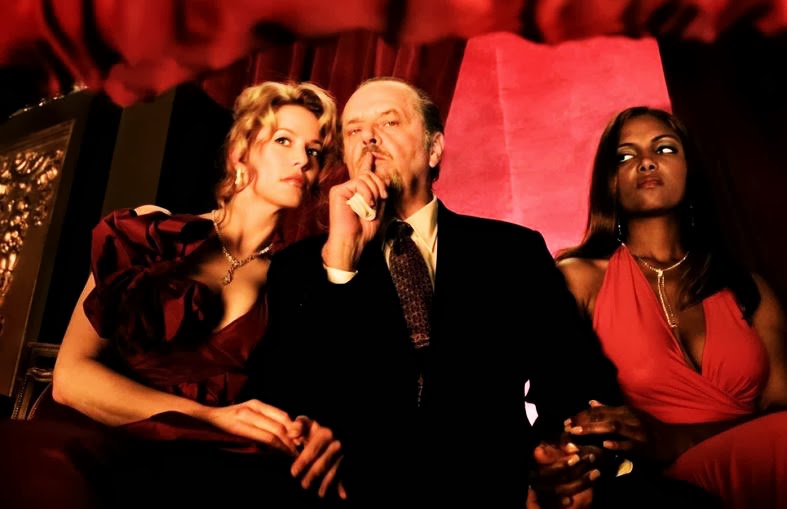 The explicit themes of the film explore deceit, crime, and loyalty. Some implicit themes explore the father-and-son relationship, absence of belief, and the idea of getting in so deep, that you become the thing you are sworn to defeat. In short, typical undercover cop fare,( e.g. "Donnie Brasco", "Rush", "Prince of the City"). Now, there's nothing wrong with typical cop fare. I enjoy typical cop fare... when it's done right. But this movie should have been more than that. Watching this movie, I feel as if Scorsese sacrificed substance for speed and exploration for energy. And though it was not a bad movie, I feel as though it took cheap and easy routes towards it final point. It took what should have been a world of grey, and turned-up the contrast to black-and-white. The good guys are definitely good, and the bad guys are definitely bad. It ultimately reduces down to an opera of rock music, blood lust and dichotomy (this is/that isn't).
The film is based, very heavily on the true case of "Whitey" Bulger. A Boston area crime boss who was able to infiltrate the FBI, acting as a mole while simultaneously gaining a blood-soaked grip of the area's underworld. I honestly feel as if this is the film Scorsese SHOULD have made. The story he should have told, with all of its complexities and murky depths. The story of an FBI agent who is corrupted, the man who corrupted him, and the agents who brought them both down.
For all of its good, bad, and ugly, "The Departed" (a film that won Scorsese an award), ultimately boils down to a perverted version of "Infernal Affairs" with a Southie accent.
I have carefully and painstakingly compiled a list of such films. And because I am NOT a chooch who makes claims that he can't back-up, I will also explain my reasons for why they disappoint.
1.) The Keep (1983)
His second feature film, "The Keep" takes that world and drops it onto World War II. The film centers around a German regiment discovering a great evil in a Romanian castle. An SS Officer (played by Gabriel Byrne) denies it. A persecuted scholar (played by Ian McKellan) seeks to harness it. And a stranger (played by Scott Glenn) seeks to destroy it.
The film looks very good. The visuals are pure Michael Mann, and the ambient soundtrack by Tangerine Dream puts us into the surreal and dark mood of the picture. The sets are surreal and immense, going beyond the realm of any WWII genre film and into the realm of fantasy. Mann's film is a world of parallel angles, grim colors and ethical inversion. The film often feels almost like a journey into the mind of a Nazi. Often it seems like a film that you must feel more than watch to understand. You crawl into it and get lost in its depths.
There are, however, glaring and profound faults with the film. Originally, the film was roughly three-hours-long, the most widely seen version of the film, the video version, was ninety minutes. There are no DVD versions of the film that I know of, and Mann has long since disowned "The Keep". You can omit it from your resume, but IMDb is an all seeing eye. The version I saw, on Netflix, was the shorter version. The plot and the film's theme are nearly impossible to understand as almost all of the exposition beyond whispered conversation between characters is lost to video editing. One gets the feeling that Mann had intended for "The Keep" to explore deeper, more profound themes about power, ideology and faith, but the extensive editing has left us with a run-of-the-mill horror/war/action film. The film's cast, despite being consummate actors, give hammy performances more at home in a Roger Corman film, rather than an A-List film by an A-List director.
Despite what I enjoyed about the film, I was left with the conclusion that "The Keep" was ultimately style with no substance. A strange and unbalanced mix of "Force 10 from Navarone", "Dracula", "Raiders of the Lost Ark" and "The Wall".
2.) The Good Son (1993)
20th Century Fox loves a box office film. The two big films of the time were "Home Alone" and "The Silence of the Lambs". Their idea: let's combine the two. The end result is 1993's "The Good Son".
11-year-old, Mark Evans (played by future hobbit, Elijah Wood) has lost his mother to cancer. When his father must go away on a business trip, Mark is left with his Uncle and Aunt in a picturesque Maine town. At first, Mark enjoys his temporary home and the company of his cousin, Henry (played by then box office draw, Macaulay Culkin). Soon, however, Mark discovers that his cousin has a VERY dark side.
"The Good Son" is not a bad movie. Not by any means. It is a very watchable movie, at least in my opinion. The film was well shot and well edited, not breaking any new round, but certainly a clean audio and visual experience. Elijah Wood's performance as a boy haunted by his experiences was very good (especially for a kid) and Macaulay Culkin's performance as the psychopathic cousin was sufficiently dark. The film really worked well in its depiction of childhood... or, at least childhood before the internet. The kids are not lily white little scamps that break a window by accident and then feel bad about it. No, they break windows because it's fun and kids like to have fun and get into trouble. Why, because kids don't understand the consequences. They are, after-all, children. And "The Good Son" depicts that convincingly. There is a light side and a dark side to childhood. Initially, "The Good Son" had a deeper and more complex script (according the IMDb). And there are definitely signs of that throughout the film. It starts to explore concepts of loss, grief, parent-child relationships, and the nature of evil only to leave them too quickly and dive back into suspense. The end result is a superficial exploration full of exposition and very well crafted writing that seems incomplete. One reason for this may have been Macaulay Culkin's domineering father whose political power in Hollywood (thanks in no small part to his son), meant that he was often able to dictate the direction of projects starring his son. If a writer or director resisted or protested (as was the case of this picture) they would be replaced. The end result, a very non-mainstream concept trying to be mainstream.
"The Good Son" was a film that, at least to me, had a lot going for it. Yes, the concept of a child psychopath is hard territory to explore, but it could have been worth it. This picture seemed to have more things to say and more depths to explore. Unfortunately, what we're left with is mainstream fare. A potentially important movie, hobbled by a studio into an unimportant one.
3.) The Departed (2006)
If you've read my post about "Mean Streets" (if you haven't, you should), you'll know that I am a fan of Martin Scorsese's work, particularly from the earlier leg of his career. But I am no fanboy. As much as I loved "Mean Streets", "Alice Doesn't Live Here Anymore", "The Last Temptation of Christ" and "Casino", I am seasoned enough to know when a master just isn't delivering. As such is the case with "The Departed".
"The Departed" is a remake of a Hong Kong film about two cops; one, a good-guy undercover as a bad guy, and the other, a bad guy undercover as a good guy. In the case of this film, it is Leonardo DiCaprio as Billy Costigan (Good Guy), and Matt Damon as Collin Sullivan (Bad Guy), entangled in the web of Boston crime boss, Frank Costello (played by Jack Nicholson). Also rounding-out the all star cast is Mark Wahlberg, Alec Baldwin and Vera Farmiga.
I preface with this (probably going to be unpopular) critique by conceding that "The Departed", like ALL Scorsese films, no matter how poorly realized, is a well made film. It is energetic, it is visceral, it is funny, it is dark and it is extremely watchable, again and again. Scorsese and his team are such storytellers and such craftsmen, that even their mediocre work outshines that of most others.
The explicit themes of the film explore deceit, crime, and loyalty. Some implicit themes explore the father-and-son relationship, absence of belief, and the idea of getting in so deep, that you become the thing you are sworn to defeat. In short, typical undercover cop fare,( e.g. "Donnie Brasco", "Rush", "Prince of the City"). Now, there's nothing wrong with typical cop fare. I enjoy typical cop fare... when it's done right. But this movie should have been more than that. Watching this movie, I feel as if Scorsese sacrificed substance for speed and exploration for energy. And though it was not a bad movie, I feel as though it took cheap and easy routes towards it final point. It took what should have been a world of grey, and turned-up the contrast to black-and-white. The good guys are definitely good, and the bad guys are definitely bad. It ultimately reduces down to an opera of rock music, blood lust and dichotomy (this is/that isn't).The film is based, very heavily on the true case of "Whitey" Bulger. A Boston area crime boss who was able to infiltrate the FBI, acting as a mole while simultaneously gaining a blood-soaked grip of the area's underworld. I honestly feel as if this is the film Scorsese SHOULD have made. The story he should have told, with all of its complexities and murky depths. The story of an FBI agent who is corrupted, the man who corrupted him, and the agents who brought them both down.
For all of its good, bad, and ugly, "The Departed" (a film that won Scorsese an award), ultimately boils down to a perverted version of "Infernal Affairs" with a Southie accent.
Tuesday, December 17, 2013
The Inner Loneliness
It was so real... so tangible. She could feel the cool air on her face, the bitter breezes that blew through the woods mussed her hair, the sweat in her armpits, the pinch of the calluses on her feet. Tall, skeletal trees lined the straight path she walked like a church's nave. The the long, decrepit figures reaching-up to the amber sky like vertical pillars of ink.
 No squirrels scurried, no birds sang, no stray cat searched-out a meal in the trash bin. She took slow, labored steps, looking to the ground and the shimmer of light on her boots. She hoped for someone, anyone to walk her way, to cross her path, to acknowledge her presence.
She yearned for the one she watched across a room, who she waited for in darkened corridors, who she saw in thoughts before the darkness of night embraced her. If only a friend, at least a friend. At least somebody to talk to, to share moments of living time with.
Nobody appeared, in those darkened halls or in the lonely cathedral of the forest. And so she continued-on, waiting and laboring every step.
 No squirrels scurried, no birds sang, no stray cat searched-out a meal in the trash bin. She took slow, labored steps, looking to the ground and the shimmer of light on her boots. She hoped for someone, anyone to walk her way, to cross her path, to acknowledge her presence.
She yearned for the one she watched across a room, who she waited for in darkened corridors, who she saw in thoughts before the darkness of night embraced her. If only a friend, at least a friend. At least somebody to talk to, to share moments of living time with.
Nobody appeared, in those darkened halls or in the lonely cathedral of the forest. And so she continued-on, waiting and laboring every step.
Subscribe to:
Posts (Atom)